
Hyper-connectivity requires new security measures
While maritime LEO services provide great benefits at an affordable price, they also introduce new attack vectors that could compromise your vessel's cybersecurity posture. Here's how to make sure you're protected.




New high-bandwidth LEO satellite services such as Starlink, OneWeb, etc. greatly accelerate ships' digitalization and safety and improve crew wellbeing. However, the significant increase in bandwidth also attracts new forms of cyber attacks that need to be addressed to keep the vessels and crew secure. Here are the top 5 new attack vectors that could exploit ships' hyper-connectivity:
Maritime Hyper-Connectivity Cybersecurity Framework
Mapping new threats, structuring a resilient protection
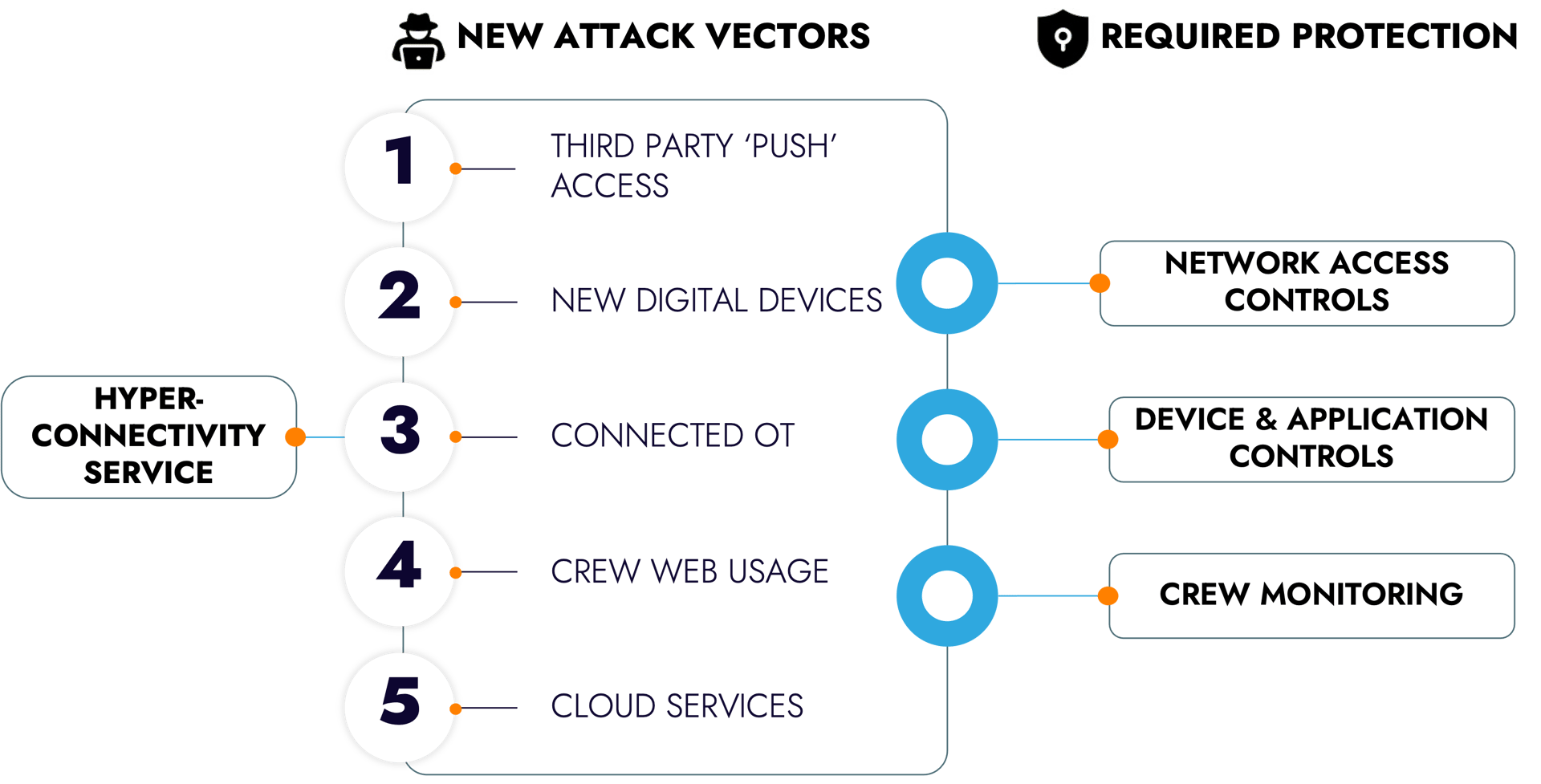
To address the new cyber risks, the maritime industry needs to invest in robust cybersecurity measures, training for crew members, and regulatory frameworks that promote awareness and compliance.
New Attack Vectors:
With High Bandwidth Comes Great Responsibility
Whether it's for improving operations, adopting new digital technologies, or improving crew welfare – introducing new technologies also brings new cyber attack vectors:
1
Third Party ‘Push’ Access
Updating devices, once a slow but secure manual process, has been revolutionized by maritime hyper-connectivity. With speed and ease, however, come new cyber vulnerabilities for malicious updates to be automatically pushed through unnoticed.
2
New Digital Devices
While more technology can greatly improve the safety, efficiency, and sustainability of a vessel, it creates previously unconsidered cyber vulnerabilities that demand overhauled safeguards for devices and networks.
3
Connected OT
As maritime OT devices progress into the realm of connected technology, new protocols and access methods open doors to system vulnerabilities and OT cannot be left unprotected. OT cybersecurity also becomes mandatory under new maritime regulations / requirements.
4
Crew Web Usage
As 80% of shipping companies provide onboard crew internet connectivity through satellite networks, new attack vectors like phishing and malware from compromised apps and websites arise. This requires new defenses, like crew network isolation and constant network security monitoring to ensure the protection of a vessel’s essential systems.
5
Cloud Services
Benefactors of maritime hyperconnectivity have jumped on the opportunity of cloud service implementation. This enhanced convenience, however, destroys the ‘internal-external’ perimeter of the past with vulnerable cloud technologies that demand overhauled cybersecurity measures for proficient protection.
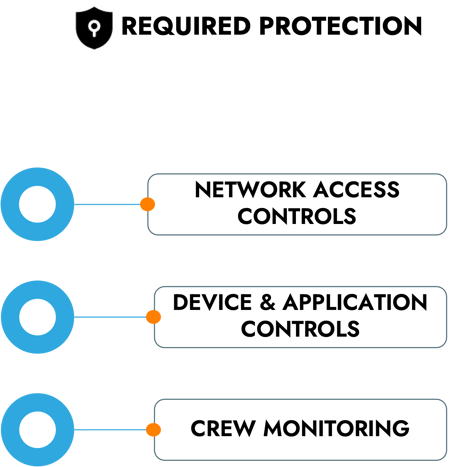
Network Access Controls
Variety of devices and users requires monitoring more network protocols – particularly for OT, and more network segregations and access control. The new maritime cybersecurity regulations also mandate this.
Device & Application Controls
High bandwidth as a catalyst for digital transformation brings new digital devices and systems. This means a new set of vulnerabilities and usage to scan and monitor for abnormal behavior.
Crew Monitoring
Segregating the crew network is no longer sufficient. While crew devices cannot be controlled by the shipping company, they can be extremely exposed to social engineering, phishing etc.
How to prevent the new risks
- Real-time threat detection and unauthorized access monitoring for all internal and external traffic and all types of users and assets
- Network segregation monitoring
- Integrity monitoring
- Mapping, monitoring, and vulnerability checks on all maritime assets (IT and OT)
- Real-time detection for each asset
- Training and awareness
- Real-time usage monitoring